
February 3, 2026 | 09:02 am
By Nabiha Shahab, Yayasan Jejak Pulang.
Extreme weather patterns are no longer an early warning, but a deadly reality. In recent years, peaking throughout 2025, Indonesia has been hit by a series of increasingly severe hydrometeorological disasters. Flash floods, landslides, and environmental crises have destroyed communities and livelihoods. Sumatra has been one of the epicenters of this tragedy, where massive deforestation in the upper reaches of river basins has combined with extreme rainfall to produce preventable disasters.
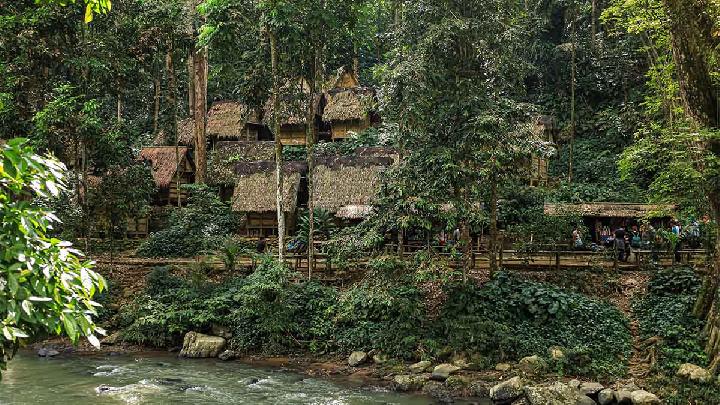
Indigenous Peoples are defenders of the environment. Their lives, cultures, and identities are inseparable from the land, forests, and waters they inhabit. Through generations of lived experience, they have developed knowledge systems and customary rules that regulate resource use, protect ecosystems, and maintain ecological balance, often long before modern conservation concepts existed.
For 16 years, the Indigenous Peoples Bill (Rancangan Undang Undang Masyarakat Adat or RUU MA) has stalled in parliament. The absence of comprehensive legal protections has left Indigenous Peoples vulnerable not only to land grabbing and criminalisation, but also to heightened risks from ecological disasters. Data from the Indigenous Peoples Alliance of the Archipelago (AMAN) records at least 135 cases of land grabbing throughout 2025, covering 3.8 million hectares, with hundreds of victims of violence and criminalisation. Ironically, more than 7.3 million hectares of indigenous territories are now under the control of mining, plantation and logging concessions.
Amid this climate crisis, one pressing question needs to be answered by the state: why are these environmental defenders left without legal protection?
The main problem lies in the lack of recognition and certainty of tenure rights. Without recognition of customary lands and territories, Indigenous Peoples have no bargaining position to reject destructive projects, let alone ensure the application of the principles of Free, Prior and Informed Consent (FPIC). As a result, development often proceeds at the expense of human and environmental safety, while agrarian conflicts and criminalisation continue to recur. This is not merely a violation of human rights, but a failure of environmental governance.
Furthermore, the state often favours business interests—extractive industries, large-scale plantations, and strategic projects—under the pretext of economic growth. This practice contradicts the principles of good and sustainable environmental management. When forests are cleared without regard for their ecological functions, the social and ecological costs are ultimately borne by the wider community with floods, landslides, water crises, and loss of food sources. In the context of the climate crisis, such policies are not only misguided but dangerous.
The Indonesian Constitution is quite clear. Article 18B paragraph (2) and Article 28I paragraph (3) of the 1945 Constitution recognise and respect the unity of Indigenous Peoples and their traditional rights. However, without specific legislation, this constitutional mandate remains hollow. The Indigenous Peoples Bill is a key instrument for ensuring the recognition, protection and fulfilment of these rights, including the right to Indigenous territories and the right to live safely from ecological disasters.
Now that the Indigenous Peoples Bill has been included in the 2026 legislative priority list (Prolegnas) and has cross-party support, there is no reason for further delay. Every delay opens the door to more conflict, environmental damage and loss of life. Passing the Indigenous Peoples Bill is not only a matter of justice for Indigenous Peoples, but also a strategic step toward mitigating the climate crisis and disasters.
Parliament must choose: continue perpetuating development that destroys and marginalises nature's guardians, or take the bold decision to protect the people and the environment sustainably. The Indigenous Peoples Bill must be passed—now—for the sake of justice, safety, and Indonesia’s future.
*) DISCLAIMER
Articles published in the “Your Views & Stories” section of en.tempo.co website are personal opinions written by third parties, and cannot be related or attributed to en.tempo.co’s official stance.
Protesters Breach COP30 Venue, Confront Security in Heated Clashes
12 November 2025
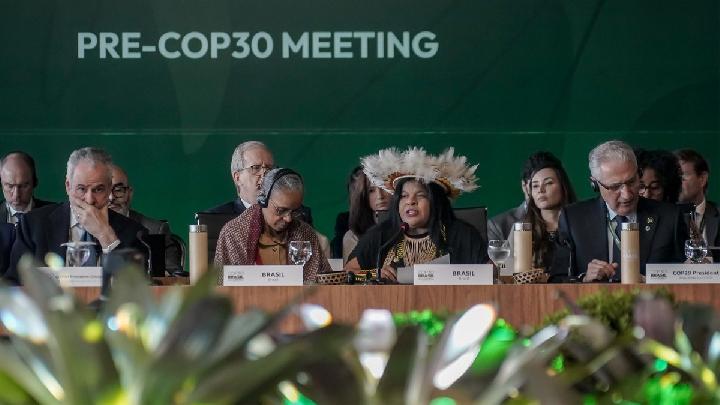
On Tuesday night, dozens of indigenous protesters stormed the COP30 climate conference venue in Brazil, demanding action on forest protection.
Govt Reprimands Jakarta Hospital for Refusing Indigenous Patient with No ID
6 November 2025
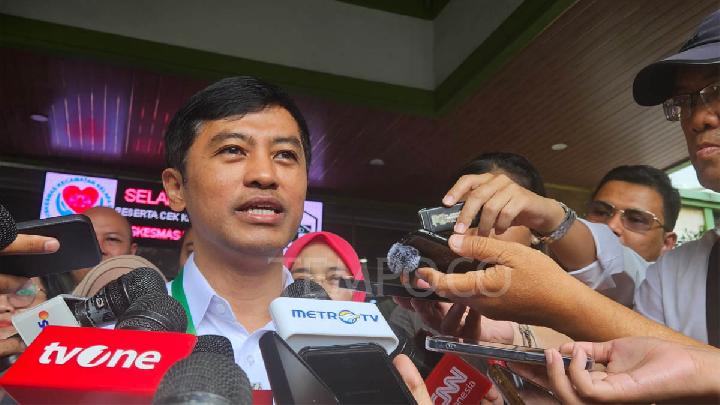
Vice Minister of Health emphasizes that refusal of healthcare services, especially in emergencies, is a violation of citizens' basic rights
AMAN: Toba Pulp Lestari Workers Assault Indigenous Residents Guarding Ancestral Land
22 September 2025

Hundreds of workers from the tycoon-owned Toba Pulp Lestari reportedly raided the indigenous community, leaving several people injured.
UN Special Rapporteur Engages with Indigenous Communities in Indonesia's NTT
11 Juli 2025

The arrival of Albert Kwokwo Barume is part of an academic visit, defined as an unofficial visit for the UN Special Rapporteur to Indonesia.
Special UN Rapporteur Visits Papua, Hears Indigenous Concerns
8 Juli 2025
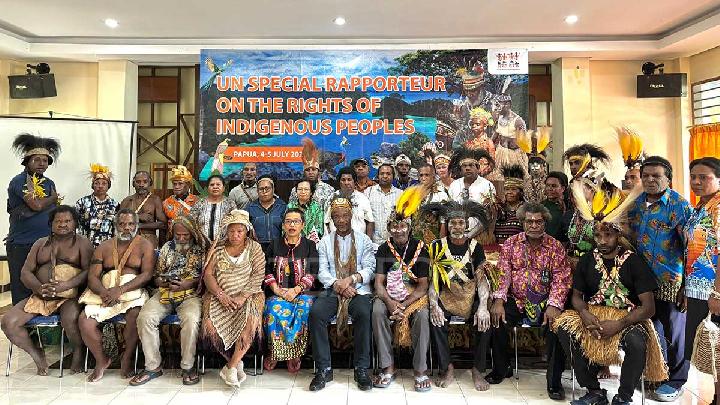
UN Special Rapporteur Albert Kwokwo Barume's visit to Papua was categorized as an informal or "academic visit".
The Customary Forest Recognition Sweetener
2 Mei 2025

Forestry Minister establishes a task force for the acceleration of customary forest designation. It is just a gimmick without any political sincerity.
Celios: Central Govt's Dominant Role in Food Estate PSN Violates Papua's Special Autonomy
23 Desember 2024

Overall, the Merauke food estate area consists of five clusters and is spread across 13 districts.
Prabowo's Future Administration Urged to Evaluate Security Approach in Papua
19 Oktober 2024

Based on Amnesty International Indonesia's observation, at least 132 unlawful killings in Papua occurred from February 2018 to August 2024.
Indigenous People Reject Merauke Food Estate as Project Implemented Brutally
17 Oktober 2024

Indigenous people from Merauke, South Papua, voiced their rejection of the National Strategic Project (PSN) food estate in their region.
Indonesian Govt Allots Rp90 billion for Resident Compensation at New Capital Project
2 Agustus 2024

Basuki Hadimuljono said the Indonesian government has prepared a budget of around Rp90 billion for residents affected by the new capital development.
























:strip_icc():format(jpeg)/kly-media-production/medias/3381466/original/043629600_1613720800-photo-1512632578888-169bbbc64f33.jpg)
:strip_icc():format(jpeg)/kly-media-production/medias/4010689/original/086569000_1651202668-pexels-rayn-l-3163677.jpg)


:strip_icc():format(jpeg)/kly-media-production/medias/5428698/original/015580400_1764559226-Kalender_HIjriah_Desember_2025.JPG)

:strip_icc():format(jpeg)/kly-media-production/medias/1626268/original/067647800_1497616352-Mantan-MenKes-Siti-Fadilah-Divonis-4-Tahun-Penjara-01.jpg)
:strip_icc():format(jpeg)/kly-media-production/medias/2855596/original/055794600_1563344847-iStock-1134972492.jpg)

:strip_icc():format(jpeg)/kly-media-production/medias/4990655/original/018003600_1730716747-tata-cara-sholat-tahajud-agar-keinginan-terkabul.jpg)

:strip_icc():format(jpeg)/kly-media-production/medias/5424037/original/048660500_1764130779-sholawat_ujang_bustomi.png)



:strip_icc():format(jpeg)/kly-media-production/medias/5448205/original/085550400_1766022443-Cek_Fakta_Tidak_Benar_Ini_Link_Pendaftaran_-_2025-12-18T084617.730.jpg)