TEMPO.CO, Jakarta - The long sandy beaches of Turkey's Mediterranean region are very popular with tourists. But there is much more to the country than the coast, and in recent years cultural tours of eastern Anatolia, which boasts many impressive historical sites, have become popular with foreigners, as have diving, mountaineering and hiking holidays in border areas that were inaccessible to both locals and foreigners for decades because of the Turkish-Kurdish conflict.
According to official data, Turkey welcomed approximately 64 million tourists in 2025, which generated revenues of around €56 billion (ca. $64 billion). In terms of numbers, the country overtook Italy in 2024, climbing to fourth place in the world after France, Spain and the United States.
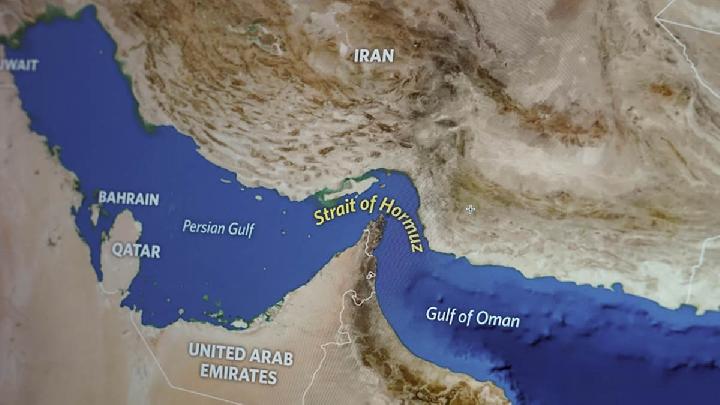
Since the COVID-19 pandemic, the tourism sector has invested heavily in comfort and safety. This year, it was hoping to surpass the 65-million-visitor mark and generate approximately €59 billion. But the Israel-US war with Iran has derailed those plans.
According to representatives in the tourism industry, hotel reservations and tours in Turkey's eastern and southeastern cities have been cancelled. Traditionally, many tourists from Iran have come to Turkey for the Nowruz festival, which heralds the arrival of spring and is celebrated on the day of the vernal equinox. Iranian tourists used to make bookings in hotels near the border, go shopping or visit relatives in exile. But this year, the hotels are empty and there are few Iranians visiting Turkey.
No Bookings from Iran
According to the Turkish Statistical Institute (TÜK), in the past few years an average of 3.3 million people visited Turkey from Iran annually. Iranians were fifth after people visiting from Russia, Germany, Britain and Bulgaria.
"Since the start of the war in Iran, travel from neighboring countries in the east and southeast has come to a complete standstill. It has also ground to a halt in the opposite direction," said Onur Tuncdemir, head of sales and marketing at Ayanis Tour, which has been offering tours to Iran and Iraq since 1997 and primarily to neighboring Kurdish regions.
"In recent weeks, we've been dealing almost exclusively with cancellations and refunds of deposits," he told DW, adding that the war had had an immediate impact on the local economy in the border regions.
He said that the tourism sector had already suffered massive losses as a result of the anti-regime protests in Iran in late 2025 and early 2026 but that since February 28, 2026, business has come to a complete standstill. He added that by coincidence this year the end of Ramadan was coinciding with Nowruz, a time when usually there would be many festivities and lots of tourists.
No Danger to Tourists in Istanbul and Antalya
Kaan Kavaloglu, chairman of the Union of Mediterranean Touristic Hoteliers and Operators (AKTOB), pointed out that there was no danger to people holidaying in popular Turkish destinations such as Istanbul, Bodrum and Antalya, and that there had not been a huge amount of cancellations so far.
He added that there was a palpable sense of caution regarding bookings from Britain in particular, but that reservations from Russia and Germany had remained stable.
The international consulting firm Oxford Economics recently forecast that "inbound arrivals to the Middle East could decline 11-27% [year-to-year] in 2026 as a result of the conflict," with Iran.
It added that there had been an impact on travel activity across the region and beyond. Many airports in Gulf states are major hubs for global travel, accounting for 14% of all flights, so there could be a domino effect.
Several analysts were very cautious about making estimates given the fact that the conflict is ongoing.
However, Mehmet Isler, the chairman of the Aegean Tourism Enterprises and Accommodation Association (ETIK), was confident: "The Turkish travel industry is very resilient. We have survived crises such as the pandemic, the war in Ukraine, and the Armenia-Azerbaijan conflict. We've become very experienced in dealing with them."
He confirmed that there had been massive cancellations from Iran and the Arab world, but assumed that tourist flows from crisis regions would shift to the safer Mediterranean, and that this could benefit Turkey too.
"The next four to six weeks will be decisive," he told DW. "We're naturally factoring in short-term losses."
So far, Iran has not attacked its neighbor Turkey, which is a member of NATO and an EU candidate country. NATO air defenses have, however, shot down three missiles that were fired in Turkey's direction.
In Europe, as the Easter holidays approach, travelers are wondering which regions might be safe. On March 11, the German Foreign Office issued a new travel warning for Turkey, advising against non-essential trips to regions bordering with Iran, Iraq and Syria.
Read: Ramadan School Activities Spark Secularism Debate in Turkey
Click here to get the latest news updates from Tempo on Google News































:strip_icc():format(jpeg)/kly-media-production/medias/4016804/original/046265400_1652067919-KPK_4.jpeg)

:strip_icc():format(jpeg)/kly-media-production/medias/5509210/original/054924500_1771663566-Koleksi_dari_Zaskia_Mecca.jpg)